
How do we post-train a text-to-image model? While recent advances have made reinforcement learning increasingly practical for diffusion-based models, improving frontier open-source models remains surprisingly difficult. The key question is: what reward should we optimize?
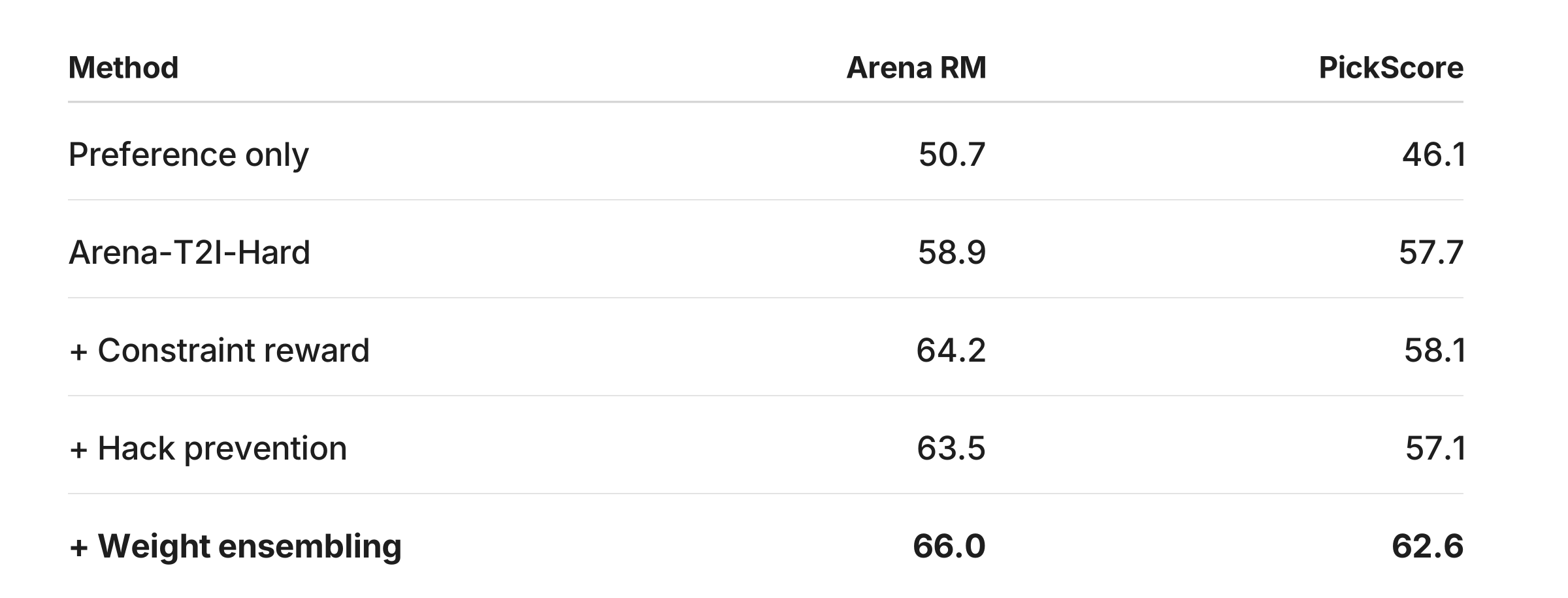
Human preference is an obvious starting point. If people consistently prefer one image over another, a reward model trained on those choices can provide a powerful learning signal. But preference alone does not capture everything users care about. An image can look great while missing an object from the prompt, adding things that were never requested, or drifting away from the requested style.
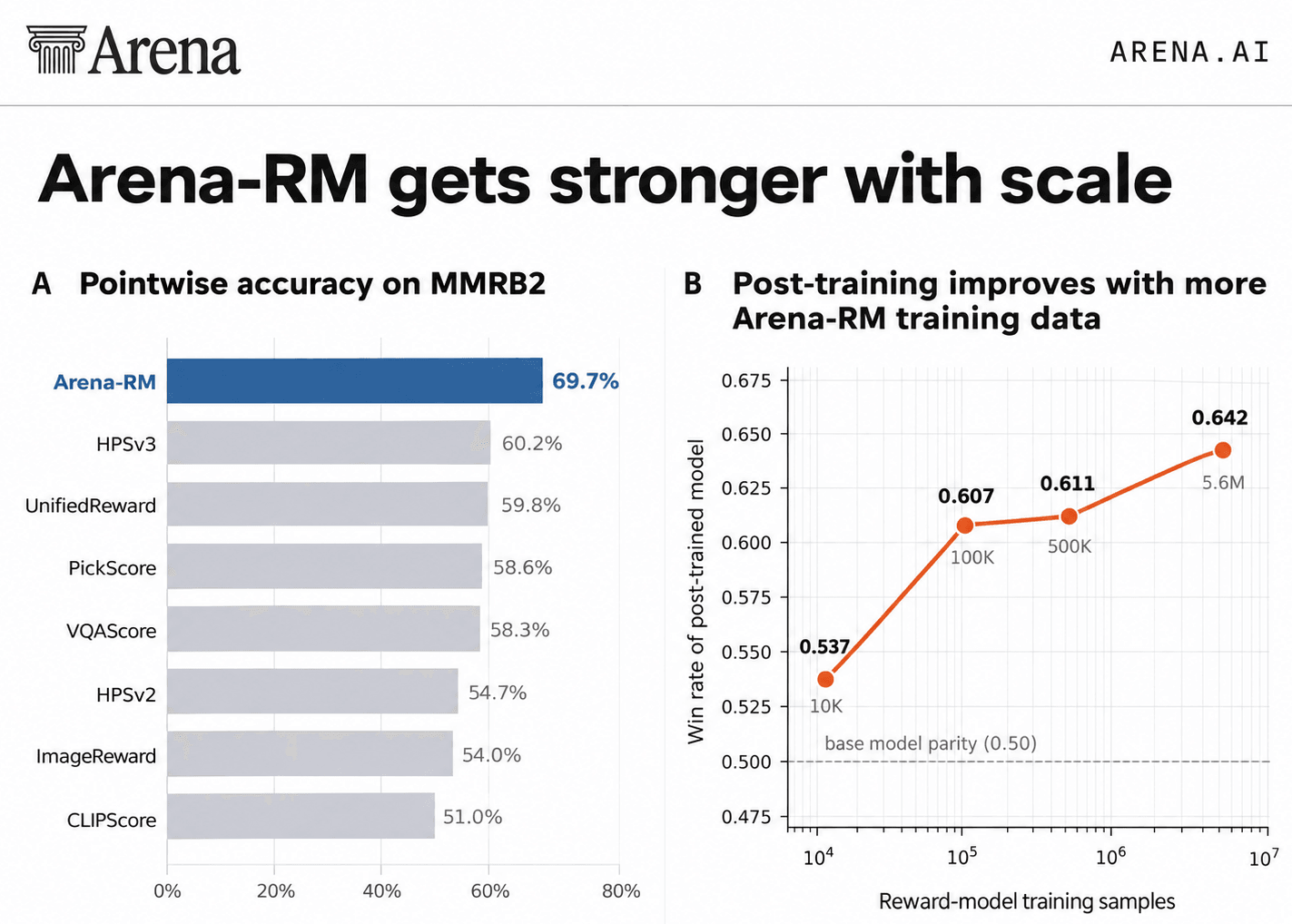
In our latest work, we explore a simple idea: combine human preference with explicit rubric-based rewards. We train an Arena reward model on roughly 5 million pairwise human preference votes, and use vision-language models to automatically construct rubrics that evaluate whether an image follows the prompt, respects relevant constraints, and avoids known reward-hacking behaviors.
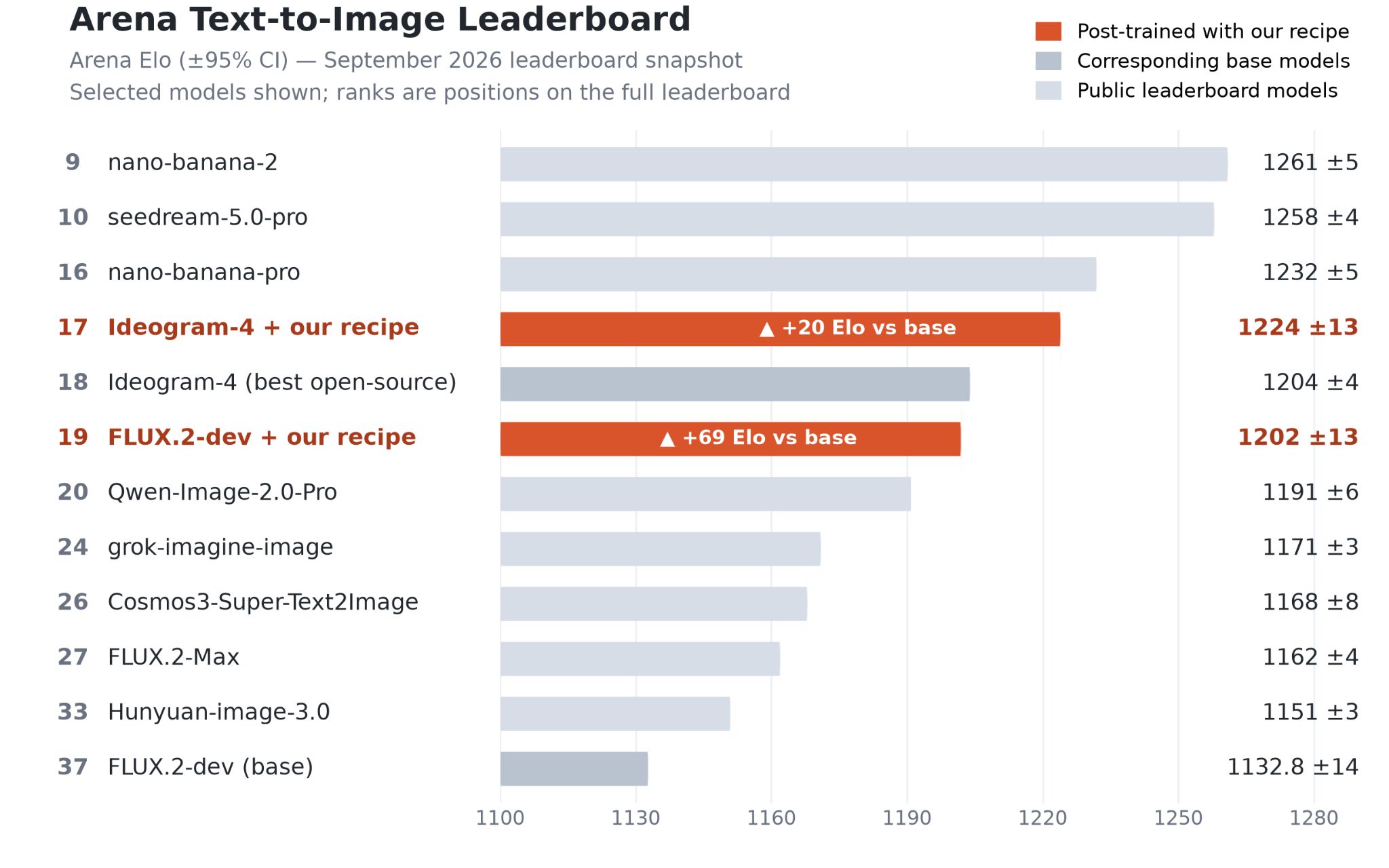
The result is a post-training recipe that improves two already-strong text-to-image models under live human evaluation. Our post-trained FLUX.2-dev gains 69 Arena points in our live T2I leaderboard, while our post-trained Ideogram 4 reaches a score of 1224 - and surpasses every publicly listed open-source model by Sep 04, 2026.
Reward Design for T2I Post-Training
Recent methods such as Flow-GRPO and DiffusionNFT have made reinforcement learning increasingly practical for diffusion- and flow-based image generation models. But what reward actually represents a better image?
Learning Human Preference from Pairwise Comparisons